Search This Blog

Wednesday, October 13, 2010

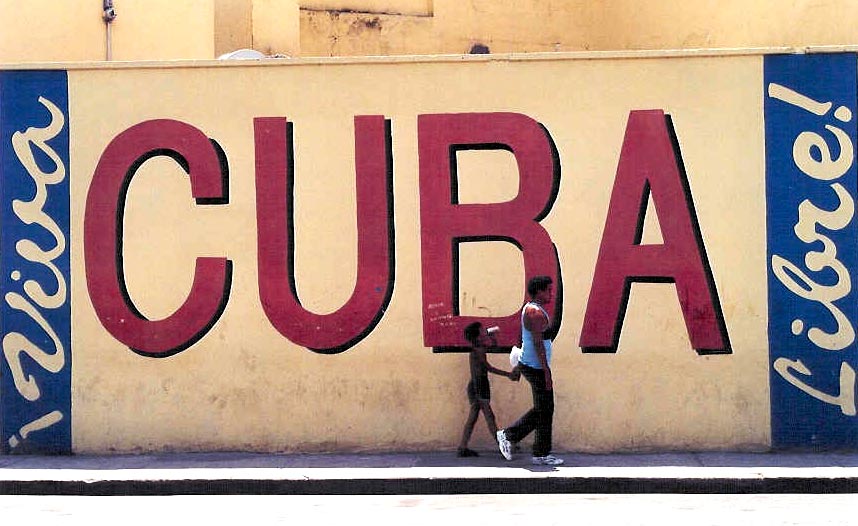
Cuba, I Hardly Knew You


I am newly back from a week in Cuba, and from the moment I started to pack to go, I realized that it was going to be hard to write about what has happened for me over the time spent there. I have even had trouble articulating the simplest responses. Answering questions like" What did you like best?" or "How was it?"

The short answer is that it was both fabulous and complicated, in equal portions. Cuba has the legacy of colonialism that all the Americas share (to a greater of lesser extent). Cuba's history does include more varied influence than most, and for the longest period of time. Christopher Columbus began the colonialist era in 1492--so Cuba was first in line, by virtue of being discovered first. But external involvement in the country continued up until the revolution in 1959. Five hundred years is a long time, and needs to be kept in mind when viewing Cuba through a lens that focuses on the last 50 years. In addition to colonization, Cuba has a history with slavery, and it's population today reflects that legacy as well.

Cuba has been big news in the 21st century because of it's continuing to adhere to communist principles in the post Soviet era, but, as is so often the case, it is much more complicated than that. The U.S. embargo of Cuba may once have held sway on the international scene, but no more, given the relative ease of access that the rest of the world has had to the island. It doesn't make the situation more complicated nor does it simplify it. What it does do is to take the U.S. out of the picture, which is maybe not such a bad idea, given our history on the island. The biggest unanswered question is what will happen when the Castros pass into the great beyond and the next phase of Cuban history commences.

Tuesday, October 12, 2010

Cuba Libre


2 oz. of rum
1/2 lime
Coca Cola
It is simple. Just squeeze the lime into a tall thin glass, drop it in the bottom and pour the rum over it--a golden richly flavored rum is preferred. Add ice and fill with Coca Cola. Stir. The lime in the bottom will add some bitterness to counterbalance the sweetnes of the soda. Was liberty bittersweet to the Cubans? Undoubtedly.

The drink was invented, it turns out, by a solider in Cuba, during the aftermath of the Spanish-American War. That was in 1900. "Cuba Libre!" was the rallying cry of the Cuban independence movement, a cause that was quite popular on this side of the Florida Straits. Sorta the "Free Tibet" of its day.
In the simplified form of Rum and Coca-Cola (hold the lime, unless you were able to get them), this was one of the chief fuels that kept the home fires burning (or intoxicated) during WWII. It helped that there was practically nothing else to drink. By 1944, all American distillers of any size had for a couple of years been forking 100 percent of their production over to Uncle Sam, and domestic stocks were dangerously low. Caribbean rum was about the only import plentiful enough to make up for that. The mixer situation wasn't much better. Sugar was rationed, and ginger ale was scarce. Not Coca-Cola, though. So while of the three rum based drinks I chronicle this week, this one is the least inventive and classic, but the most resourceful.

Monday, October 11, 2010

Havana Nocturne by T.J. English


The subtitle of this book is "How the Mob Owned Cuba and Then Lost It". Which is the Cliff Notes version of what the book covers. Organized crime made inroads into Cuba during Prohibition, but after World War II they opened casinos, attempting to do what eventually happened in Las Vegas. They went legit. In Havana they owned hotels and casinos, they had bars, and sex clubs, and every thing was above board. Unfortunately for them they were not well liked. The seamier side of human behavior that was being fomented in Havana did nothing to endear them to the locals, and if the powers that be were not bribable, it probably wouldn't have come off, and they certainly couldn't be protected after the revolution. They were in danger from each other to begin with, and Castro just made it impossible. But by that time they were headed elsewhere. The Nevada desert beckoned them, and they left Havana behind.
In all of my reading, I have yet to figure out what about this particular mix of location and the crossing of cultures that made Cuba what it is and was and gave to the world. But I am sure that it was not the mob. The mob recognized the zest for life the culture invited, but they did not add anything beneficial to that--they just brought Americans there--so we have a sense of the hedonism that could be supported there should man be left to his own devises. There is a lot of blood and gore, and some interesting history intertwined.

Sunday, October 10, 2010

Daiquirí


2 oz. Rum
1/2 tsp. Sugar
1/2 a Lime
Ice
Use a short tumbler, add the lime to the bottom (squeeze it then add it--the rind adds some bitterness to the drink that is a plus). Top with ice, add rum, and sprinkle the superfine sugar on top, let it dissolve, then stir. More or less can be added depending on the desire of the imbiber.
The recipe combines three ingredients that are local, the balance being struck between the sweet and the sour is one that is up to the bar tender, and then served over ice--hard to say if it is Cuban in origin, hard to deny that it is the most obvious of cocktails to emerge from the Caribbean. What we can say is that they are named after a Cuban beach (which should be considered nine tenths of invention--the name implies it comes from Cuba), and it is very successful as a cocktail. In the book on Bacardi, Hemingway was given credit with single-handedly bringing the daiquirí to the western world, so no matter how you feel about his writing (I think that 'The Short Happy Life of Francis McComber' is one of the all time best stories), we have to give him credit for that.

Saturday, October 9, 2010

The Handsomest Man in Cuba by Lynette Chiang


This is a memoir of a woman from Australia who spent three months biking around Cuba. She is not a gifted writer, but she is good, and her account of the people she met, the atmosphere she encountered, the pitfalls that befell her, and the best parts of her journey are well worth reading if you are contemplating a trip to the island in the the next decade. The stories ring true for me (I will have further reflections once I have the chance to be there myself and think about how it relates to my own encounters), and while it is not the peak of optimism, it is balanced and fair. Lynn is not coming at travel from the swoop in and swoop out tourist angle--she is traveling on a budget--not like a Cuban, mind you, but she bargains for her accommodations and food, and she is not above going hungry, or walking away from being taking advantage of. Her story made me think that it was possible to get through the trip without necessarily becoming horribly ill. The book tells some wonderful stories about people who are making do in a climate that is forgiving, but with very little available to them outside of what is actually grown and made there. The world in Cuba is decidedly not flat.

Friday, October 8, 2010

Cuban Sandwich


1 baguette
2 Tbs. yellow mustard
1/4 lb. baked ham, thinly sliced
1/4 lb. roast pork, thinly sliced
1/4 lb. provolone cheese, thinly sliced
10 thin dill pickle slices

Directions
Slice the bread horizontally in half, leaving 1 edge intact. Lay the bread open and spread each side with the mustard. Divide the ingredients evenly among the slices of roll. Start with the ham followed by the pork, cheese, and dill pickles. Bring the tops and bottoms together.
Heat your panini maker or sandwich press. Butter each side of the press. Place the sandwiches inside, press down and grill until the cheese is melted and the bread is flat and browned, approximately 10 minutes.
Cuba, land of great rum drinks, also has this classic sandwich, with pork cooked two ways, highlighted by the tang of vinegar two ways (the mustard and the pickle) and the crunchy and chewy harmony of the bread. Sublime.

Thursday, October 7, 2010

Bacardi and the Long Battle for Cuba by Ted Gjelten


The story of the Bacardi family is a great one, and if I hadn't been getting ready to go to Cuba, I would have passed right over this book. I have been musing about why Cuba became the land of newly created culture that it has spread to the world, and one of the reasons might be found in the Bacardi clan. They were a family that had fierce loyalties--to Cuba, to their family, and to independence. The last half of the book is about how while they supported revolution in Cuba, they did not support communism, and the family had to leave Cuba, which embittered that generation.

What did they do that was so ground breaking? It was simple and brilliant. They took the technique that was being used to produce vodka, whereby the distillation was run through a charcoal filter to take off the rough edges, and they applied it to rum. And it worked like a charm--the rum they produced quickly became wildly popular, known as the best. And they were able to produce the same quality and flavor again and again. That sort of quality control was not known in rum production and they managed to do it and do it well. The family was entirely hands-on in their approach to their factories--they visited the factories and were concerned with the working conditions and the lives of their workers. Even at a time when it was not the culture to do so. They had some luck in the whole unhappy unraveling of Cuba, in that they had expanded outside the country, and therefore had a business when the whole business climate there imploded. Great saga.

Wednesday, October 6, 2010

Isla de Cuba


Cuba is the melting pot of the Caribbean. Why did this happen? How did it happen?
The prevalence of native Americans? The Spanish? The relative late arrival of slavery? The French? The privateers? The gold? The mob? What combination of factors led to the creation of a culture that seamlessly melds the best of the cultures presented to it, and produced food, drink, music and dance that came to symbolize 'joie de vivre' to generations of Americans and Europeans?
In New Orleans we had a similar mix--slavery, mixing of cultures and races, equal parts French, Spanish, American, and African--and yet what evolved there was a culture that is entirely different--a musical tradition all it's own, as well as a cuisine--so melding, but less African, more European. What allowed the African influence to shine through so exceptionally in Cuba?
Nothing I have read to date really explores this--I have read both fiction and non-fiction, and while Jamaica and Haiti grew mammoth amounts of sugar cane, relying on slaves to farm it, this culture came late to Cuba-exiled from Haiti, looking for another stopping off point. What about this made Cuba what it is?
I hope to learn more about that.

Tuesday, October 5, 2010

Mojito


Called the classic Cuban cocktail. And intricately meshed over time with Cuba's complicated history with Bacardi and rum production. The history of the Mojito is entwined with the Caribbean's privateering past. Off the coast of Cuba in 1595, when Pirate Captain Francis Drake and his band of men were pondering whether or not to seize the Aztec gold stored in Havana's royal treasuries, they were also busy battling scurvy with citrus-based drinks. Before Captain Drake could set out on his attempt to sack the city, King Philip II was able to warn his governor in Cuba, leaving time for the city to prepare. Pirate ships appeared on the horizon, and Havana braced itself for the worst, Captain Drake suddenly sailed away after firing only a few minor shots, much to the amazement of the inhabitants. But as he sailed away from the richest port in the West Indies, the Captain did not leave without impacting generations and generations of the Cuban civilization. It was around this time that one of his subordinates, Richard Drake, invented the cocktail known as the Draque, Drak or Drac, a concoction that he introduced to all the Spanish ports he was able to conquer and seize.
Initially created for 'medical purposes' (some would say it still maintains that role), the Draque was made by combining aquardiente (a crude, or less manufactured forerunner of rum), sugar, lime, and mint. On one occasion, during one of the most massive cholera epidemics ever, narrator Ramon de Paula describes: "Every day at 11, I consume a little Draque and I am doing very well."
It was during the mid-1800s, around the same time Don Facundo Bacardi Masso established the original Bacardi Company, that the aquardiente in the Draque was replaced with rum, and the drink was unofficially called Mojito, from the African word "mojo", meaning to place a little spell.

Monday, October 4, 2010

Growing Old


May God bless and keep you always
May your wishes all come true
May you always do for others
And let others do for you
May you build a ladder to the stars
And climb on every rung
May you stay forever young
Forever young, forever young
May you stay forever young.

May you grow up to be righteous
May you grow up to be true
May you always know the truth
And see the lights surrounding you
May you always be courageous
Stand upright and be strong
May you stay forever young
Forever young, forever young
May you stay forever young.

May your hands always be busy
May your feet always be swift
May you have a strong foundation
When the winds of changes shift
May your heart always be joyful
And may your song always be sung
May you stay forever young
Forever young, forever young
May you stay forever young.

Joyeux Anniversaire, Tucker.
You are leaving your teens behind you.
May you retain your love of ballads,
may your dramas be fewer.
May you enjoy your love of life,
and continue to draw people into your sphere who bring you joy.
The 20's are a tricky decade, and I wish you a wonderful day, year, decade, century...